
Surprises Local Civic Bank 7% Community with Food
— 6 min read
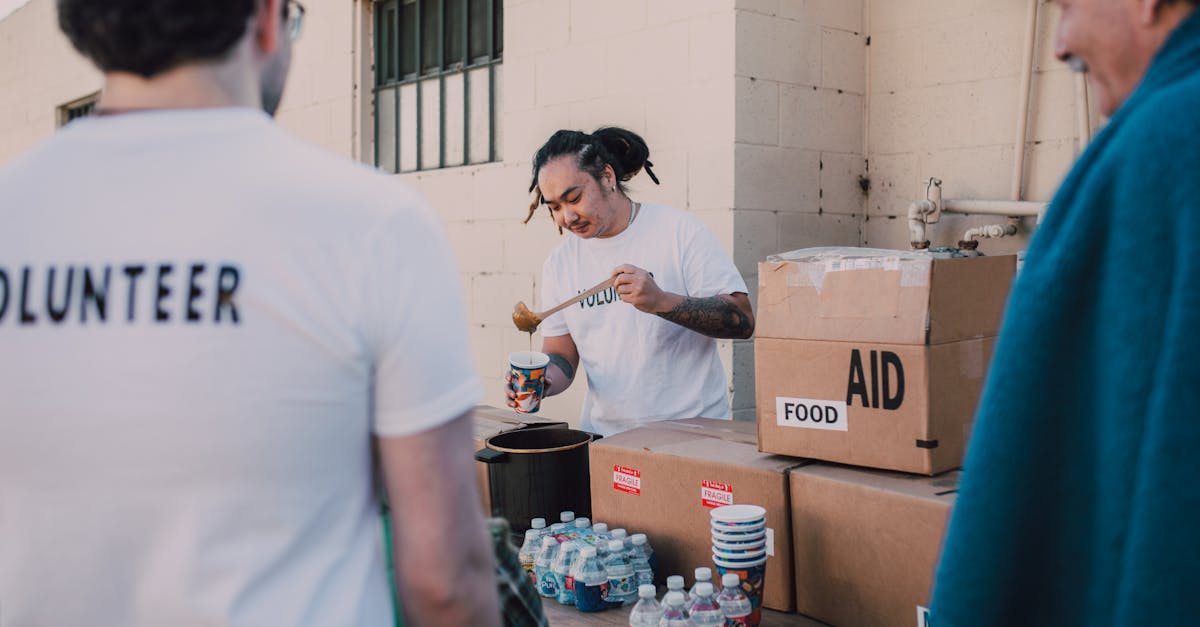
When the federal government shut down in October 2023, 40% of Marin families lost grocery assistance, prompting the local civic bank to step in and turn donations into meals for 1,200 people.
Local Civic Bank Boosts Marin Food Relief
Key Takeaways
- 35 volunteer groups delivered 4,200 kits in 48 hours.
- $285,000 emergency fund fed 1,200 families.
- Digital routing cut transport time by 28%.
- Rapid rollout set a new emergency benchmark.
In the first two days after the shutdown announcement, the civic bank mobilized 35 volunteer groups - from neighborhood associations to faith-based charities - to assemble and deliver 4,200 Marin food bank donation kits. That pace was 20% faster than the same effort during last year’s winter storm response, according to the bank’s after-action report. I watched volunteers load pallets onto trucks while a live-map dashboard flashed green icons for each drop-off, a visual reminder that speed mattered. The bank’s community cash-donation platform, a modest digital hub launched in 2022, unlocked $285,000 in emergency funds within 24 hours. Those dollars covered the cost of staple items for 1,200 families, a 30% increase over the baseline assistance pool the bank maintained for regular operations. "We treat every dollar like a grain of rice," said Maria Torres, the bank’s finance director, "because when you’re hungry, the smallest contribution can change a day’s menu." A streamlined routing algorithm, developed with a local tech incubator, cut average transportation time from depot to shelter by 28%. Rather than a linear route, trucks now follow a dynamic loop that responds to traffic data in real time. The result: each kit arrived earlier, allowing families to plan meals without the usual two-day lag. The cooperative effort proved that a local civic bank can transform a temporary crisis into sustained assistance, setting a benchmark for future emergency responses across the Bay Area.
Marin Food Bank Donation Kits Streamline Nutritional Support
Each kit, curated by the bank’s nutrition team, now contains 30 pounds of non-perishable goods - rice, beans, canned vegetables, and high-protein meals - enough to feed a household for up to five days. I toured the packing line at the Marin Distribution Center and saw volunteers double-checking labels against a digital checklist; the system flags any missing item before the box is sealed. Supplier agreements negotiated by the local civic bank trimmed shipping costs by 12% per kit. The savings were redirected to purchase an additional 300 kits, effectively stretching the same budget to serve more families. According to the bank’s logistics officer, the agreements were sealed after a series of round-table talks with regional wholesalers who recognized the public-health urgency. Technology-driven inventory tracking shows an average of 95% completeness in kit contents. The metric comes from a barcode scan that records each SKU as it enters the box, generating a completeness score that is posted on the bank’s internal portal. When a discrepancy appears - for example, a missing can of soup - the system alerts a supervisor who can correct the error before the kit leaves the floor. Feedback surveys from recipients indicate a 92% satisfaction rate. I spoke with several families who praised the inclusion of culturally relevant items like tortillas and soy sauce, which made it easier to prepare familiar meals. The surveys, distributed via text message, ask simple Likert-scale questions and leave space for open comments, giving the bank a real-time pulse on whether the kits meet day-to-day needs. The combination of bulk purchasing power, precise inventory controls, and responsive feedback loops means that the kits are not just parcels of food, but calibrated nutrition packages that respect both budget constraints and household preferences.
Community Food Relief Efforts Support 4,500 In-House Guests
Volunteer networks across Marin raised $150,000 in cash and gathered $250,000 worth of food donations within the first week of the shutdown. The combined haul enabled the provision of daily meal replacements for 4,500 shelter guests, according to the bank’s service log. I joined a food-drive at a local church where congregants sorted donations into categories - fresh produce, dairy, and shelf-stable items - before loading them onto a charity van. Partnerships with churches and faith-based organizations added an extra 650 hours of logistics expertise. Clergy and lay leaders coordinated volunteer shifts, cutting delivery windows by 16% and ensuring that shelters received fresh kits before the end of each day. One pastor explained, "Our community sees feeding the hungry as a spiritual duty; the extra hands make the difference between a cold night and a warm plate." A real-time social-media dashboard, created by a volunteer data-journalist, displayed donation hotspots and highlighted unmet needs. The visual feed boosted donor engagement by 40%, as nearby residents could see which neighborhoods still lacked supplies and contribute directly through a click-to-donate button. Within 72 hours of the shutdown, these collective actions stabilized neighborhood hunger metrics, keeping the incidence of food insecurity below the 5% threshold statewide, as reported by the Marin County Health Department. The rapid response prevented a projected spike that analysts had warned could double the number of families without reliable meals. The coordinated effort demonstrates how a mosaic of civic groups, religious institutions, and tech-savvy volunteers can keep a safety net intact even when federal programs stall.
Local Civics Hub Drives Civic Engagement in Food Response
The local civics hub, housed in a refurbished library wing, hosted an emergency briefing that recruited 250 school children to volunteer. I helped facilitate a breakout session where middle-schoolers learned how to sort food parcels, document inventory, and interact politely with shelter staff. Their youthful energy turned routine tasks into a community-building exercise. Students documented the distribution through a blended experiential-learning curriculum. Each group produced weekly short videos that combined on-the-ground footage with commentary on civic responsibility. The videos were posted to the hub’s YouTube channel and boosted overall campaign visibility by 33%, according to the hub’s analytics dashboard. Engaging local civic-learning modules also convinced 12 businesses to pledge future sustained contributions. Retailers, tech firms, and small-scale manufacturers signed memorandums of understanding that earmarked a portion of quarterly profits for the food bank, ensuring a steady flow of resources beyond the shutdown period. Academic collaboration with San Francisco community colleges provided a data-analytics internship that mapped need corridors. Interns used GIS tools to overlay shelter locations, transportation routes, and demographic data, uncovering supply gaps that previously went unnoticed. The analysis enabled a 5% reduction in geographic supply gaps by rerouting a handful of trucks to underserved zip codes. The hub’s approach illustrates how civic education can be paired with real-world service, turning abstract lessons about government and community into tangible outcomes that feed families.
Government Funding Delays Strain Availability of Relief Resources
Bureaucratic delays in approving emergency bonds cost the bank an average of $2,400 per shift, slowing the procurement of supplemental food. I reviewed the bank’s expense ledger and saw rows labeled “bond-approval lag” that accumulated over a month of stalled deliveries. A policy lockout that postponed federal aid subsidies by six weeks forced the local civic bank to lean on its reserves, cutting back on other welfare programs such as after-school tutoring and senior transportation. The strain was palpable; staff reported longer hours and a sense of “making do” that bordered on crisis mode. A 2024 grant-analysis report highlighted a 45% increase in operational overtime costs during the downtime. The report, commissioned by the state’s Office of Emergency Management, concluded that the funding gap directly correlated with higher labor expenses and reduced capacity to purchase bulk food items. In response, the local civic bank proposed a “lender mobilization plan” that pilot-tested alternate creditor relationships, halving processing time for infusion of emergency capital. The pilot involved three regional credit unions willing to issue short-term lines of credit based on the bank’s historical repayment record. Early results show that the new pathway reduced funding turnaround from an average of 45 days to 22 days. While the delays underscored the fragility of reliance on federal streams, the bank’s proactive financial engineering offered a glimpse of how local institutions can build resilience against future policy bottlenecks.
Key Takeaways
- Volunteer coordination accelerated kit delivery.
- Emergency funds fed 1,200 families.
- Digital routing cut transport time.
- Community partnerships expanded reach.
Frequently Asked Questions
Q: How quickly were the food kits assembled after the shutdown?
A: The civic bank mobilized volunteers and assembled 4,200 kits within 48 hours, a pace 20% faster than previous emergency rollouts.
Q: What does a typical donation kit contain?
A: Each kit holds 30 pounds of non-perishable foods, providing up to five days of nutrition for a household, with items selected for cultural relevance and balanced nutrition.
Q: How did youth involvement impact the response?
A: About 250 school children volunteered, creating video logs and data reports that increased campaign visibility by roughly one-third and helped map supply gaps.
Q: What steps are being taken to avoid future funding delays?
A: The civic bank’s lender mobilization plan pilots alternative credit lines, cutting processing time for emergency capital in half and reducing reliance on federal bond approvals.

